Retrieval over Reading
2026-01-21
“Icebreaking Activity”
FAST – RAPID
LAMP – LI__T
KING – CROWN
TREE – LE__
LONG – SHORT
HARD – SO__
KNEE – BEND
FOOT – SH__
STOVE – HOT
ICE – C__D
LION – ROAR
DOG – B__K
RED – ROSE
BLUE – S__
SLOW – TURTLE
HIGH – L__
WISH – WANT
BEAUTIFUL – P__TTY
DARK – NIGHT
WHITE – BL__K
OK LETS DISCUSS THE SYLLABUS
Diagnostic Quiz
TREE
DOG
FAST
BLUE
STOVE
WISH
ICE
LONG
BEAUTIFUL
KNEE
RED
HIGH
LION
FOOT
DARK
LAMP
SLOW
HARD
WHITE
KING
Checking
Grade separately words pairs with blanks and word pairs that were given completely.
Compare your final scores.
TREE – LE__
DOG – B__K
FAST – RAPID
BLUE – S__
STOVE – HOT
WISH – WANT
ICE – C__D
LONG – SHORT
BEAUTIFUL – P__TTY
KNEE – BEND
RED – ROSE
HIGH – L__
LION – ROAR
FOOT – SH__
DARK – NIGHT
LAMP – LI__T
SLOW – TURTLE
HARD – SO__
WHITE – BL__K
KING – CROWN
Result
You are much more likely to have gotten the words with blanks CORRECT.
- Words without blanks: You read and accept it.
- Words with blanks: You read, think about what it is, then you say “ok that makes sense”.
What we just did is the same experiment in the seminal 1978 Learning Psychology paper The Generation Effect
Pre-141 Study Tips
Per the statistics EEE 131 is objectively difficult. EEE 141 is also objectively difficult.
But it doesn’t have to be!
- Both of these were my favorite subjects!
- My grades were lowest at the start of undergrad, but slowly improved.
- The following are what I can remember were useful to me.
Active Recall
From the activity, we can take:
- Writing down what you know is better than reading the slides again.
- Practice filling a yellow pad with EVERYTHING you remember first, THEN reading the slides
This modifies your neural circuits not to just familiarize, but to be good at recalling.
Familiarity \(\neq\) Understanding
Quite often, you can find yourself having trouble with a problem that you’re supposed to know easily. The following are likely cases of mistaking familiarity for understanding:
- “I remember this lesson but I can’t solve the problem”
- “The exam problems are too different from the slides”
In any case, it’s better to have this problem BEFORE the exam.
Familiarity \(\neq\) Understanding (2)
Bjork 2011
Be aware, too, when rereading a chapter or your notes, that prior exposures create a sense of familiarity that can easily be confused with understanding.
Generate your own questions
- Actively think up questions about the subject matter during the class. Write it down. Why do electrons move up? Why is frequency response important? Do we really use coupling capacitors for everything? Does anyone ever use JUST a CE amplifier?
- Create your own sample problems. If you can make a sample problem, then you understand WHY we try to learn a specific lesson. You have mastered the concept. This is true understanding.
Generate your own questions (2)
I was always the annoying kid who kept his instructor in the classroom for about 15 minutes after class, asking about theoreticals.
- Please ask me questions after class. ANY question.
Tip
Nowadays, chat AI can typically answer questions like these very easily as well!
Miscellaneous
- Answer ALL the samplex you can1 2.
- Study in various places. This is known to be more effective3.
- Interleave subjects!. This is also known to be more effective than studying one at a time.4
Further Reading
If you’re interested in the neuropsychology of learning:
- Desirable Difficulties (Bjork 2011)1.
- Google “Feynman Technique” (Not actually made by Feynman).
- How to Solve It (Pólya 1945)2.
Sem-wide Bonus
Handout Generation
Create a handout version of the slides for a specific lesson in EEE 141.
Use stackedit or your any Markdown editor (notepad works) to create the handout.
Sign up for a specific lesson in the link above.
One (complete) handout is worth one bonus handler grade point. (1% of grade) - note that this is about as much as a single homework.
Experiment: Identify the Painter
Georges Seurat

Georges Seurat

Georges Seurat

Georges Seurat

Paul Cézanne

Paul Cézanne

Paul Cézanne

Paul Cézanne

Maurice de Vlaminck

Maurice de Vlaminck

Maurice de Vlaminck

Maurice de Vlaminck
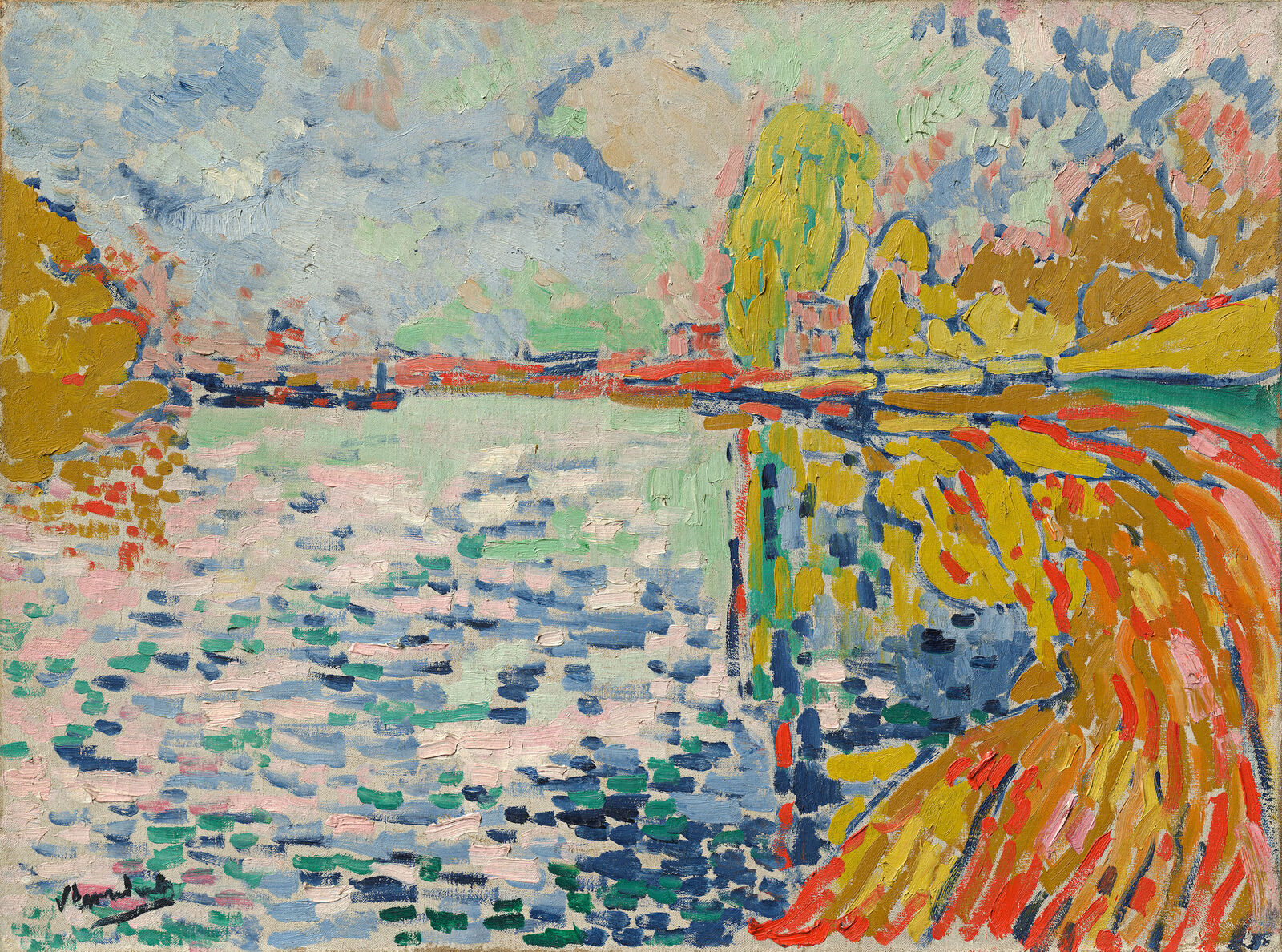
Paul Gauguin

Paul Gauguin

Paul Gauguin

Paul Gauguin

Who?

Georges Seurat
Who?

Paul Gauguin
Who?

Maurice De Vlaminck
Who?

Paul Cézanne
Who?

Maurice De Vlaminck
Who?

Georges Seurat
Who?

Paul Gauguin
Who?

Paul Cézanne
appendix
Feynman Biography
From The Life and Science of Richard Feynman
On the title page he wrote: Notebook Of Things I Don’t Know About. For the first but not the last time he reorganized his knowledge. He worked for weeks at disassembling each branch of physics, oiling the parts, and putting them back together, looking all the while for the raw edges and inconsistencies. He tried to find the essential kernels of each subject. When he was done he had a notebook of which he was especially proud.